I was diagnosed with “post-partum thyroiditis” after the birth of my first baby. I didn’t know anything about the condition at the time, and the medical explanations provided by my carers may as well have been in Chinese, but I was put on medication to address my symptoms, told it may eventually self-correct, and also told by more than one person that it wasn’t a big deal. And that was how I related to all this – not a big deal, and effectively dealt with.
After almost 9 years, I’m coming to realise some home truths about thyroid disease, and they way in which this health complication has affected me.
A few years into my diagnosis, I began taking a more proactive approach to my health. This was at the prompting of my Mum, who had begun her own research into her diagnosis of Hashimoto’s Thyroiditis, an auto-immune condition that renders the thyroid gland unable to effectively do its job of producing thyroid hormones to service every cell of the body. I began reading and researching, and learning what I could do to improve my health and prevent progression of the condition. I made some significant dietary changes which made a difference and greatly improved my blood test results. I wanted to be sure that I was doing everything I could, so I took my newfound knowledge to my GP, but as she openly explained, she didn’t have the training to know what to do with any of the suggested testing. After some time, I sought the help of a naturopath who was able to give me some further support, but in the end I didn’t achieve the sort of progress I was seeking.
Four years on, I was fed up with being on a medication that none of my healthcare practitioners seemed to want to help me get off. As time has gone on, and I’ve continued researching, I’ve learned that there are many people that have put their thyroid conditions into remission. I’ve also discovered the longer term serious health implications of not addressing this issue at the root cause. And more alarmingly, I’ve come to realise that so many of the symptoms that I have put up with and accepted as part of Mum-life or as a personal failing, are likely due to being under-medicated as well as stemming from deeper root causes.
After what feels like a very long time, I’ve finally begun working with a wholistic integrative GP who has a much better understanding as to the workings of thyroid disfunction. After 2 consultations and one set of testing, we’ve already uncovered a few key issues that may well be at the root of my thyroid related symptoms.
What does all this have to do with me being absent from the online space these past months? Whilst I won’t bore you with all the many and varied symptoms, there are some key ones that I have been challenged with this year, that have made it difficult to be here. Namely:
- Fatigue, exhaustion, lack of energy;
- Mood swings, anxiety, depression, overwhelm, irritability, despair;
- Brain fog, forgetfulness, confusion.
I’m not sharing my challenges in a bid for sympathy. Rather I want to offer you the courtesy of an explanation, as well as be open about my challenges which I am well aware affect SO MANY others in our society, but which we feel too embarrassed or ashamed to speak about. I tend to be a pretty open book, but when it comes to issues around mental and emotional health or our ability to cope with day to day life, even I can feel awkward in speaking openly and honestly. Truth be told, I find it easier to share in a forum like this to get the conversation started.
The thing is, awareness and acceptance of mental illness has come a long way with all the various campaigns encouraging us to open up, seek help, or ask each other “R U OK?” But the thing that I feel I must express in this instance, given my experiences, is that there is so much more to this issue that we really need to address. Here’s why:
- I spent a period of time a few years back on anti-depressant medication, which I now know may have been better addressed by more adequate treatment of my thyroid disfunction. This is not to say that anti-depressants are never indicated, but that in my case, they acted as a band aid solution with unpleasant side effects both when taking them and when coming off them. How many of us are medicated for the symptom, rather than the cause?
- Your medical professional does not necessarily have all the answers. I spent hundreds of dollars seeking the advice of a medical specialist that I assumed (without a thought!) had all the knowledge to properly treat me. As it turns out, this endocrinologist didn’t test some of the basic markers that could have better addressed my condition – my GP did more comprehensive testing. This is not a criticism of medical professionals in general (I believe mine cared and were doing the best they knew how with the knowledge they had), or a suggestion that you should not consult the relevant medical professional for your health concerns – it is simply to say that they DON’T NECESSARILY have ALL the answers, and we need to be responsible and proactive in our own healthcare.
- The embarrassment or shame that so many of us still feel when suffering from these issues can prevent us from taking responsibility and further action and advocating for ourselves. It took me a long time to work up the courage to seek the help of a naturopath, and when that didn’t work out, an additional 4 years to prioritise my health enough to seek out and invest in an integrative GP. Despite knowing logically that I needed to do this, the insidiousness of mental health related issues left me feeling unworthy, feeling like my difficulties were self-induced, and I was unable to consistently hold the conviction that I needed to seek better help. Also, my lack of mental clarity had me constantly questioning and second guessing myself and what I’ve learnt through my research.
- In addition and related to the last point, it infuriates me that so many of us hold such low standards for what it means to be well. As a mum of young kids, it anguishes me that so many mums believe that feeling vital, energetic, glowing, and fantastic is too much to ask or unrealistic. We seem to be soaked in this depressing consensus that to be a mum means to feel constantly exhausted, to prioritise everyone and everything else above our own wellbeing, that taking excellent care of ourselves is an indulgent luxury (that is sometimes shamed when it is witnessed), and that a respectable and decent mother and/or member of society must get over herself when she’s feeling not-so-great and soldier on. I am not immune – I found it so easy to passionately promote the supreme importance of self care, yet putting those beliefs into action has proven to be a confronting challenge, and one that I continue to face. I recently heard someone speaking on the topic of self care, and they made a point which really hit home to me. She commented that we so often hear the self-care metaphor about the oxygen mask in an air emergency: fit your own mask before helping others. Whilst taking the advice of this metaphor seems a wise and sensible move, there is a subtle problem with it – we only need the oxygen mask in an emergency. So many of us wait until disaster, when there is no other option than to prioritise ourselves, reducing the guilt or fear of judgement and criticism. The truth is, we’d be so much better off tending to our own needs as a priority before the #@$% hits the fan. If we truly prioritised our wellbeing, we’d effectively avoid getting to the point of emergency through neglect.
I am ok. I am not gravely ill, and I finally feel confident that I’m moving in the right direction towards better health even though I understand that the path forward may not be smooth sailing. Time will tell whether I need the help and support of additional health care professionals, but I know that if need be, they are out there and I can seek them out to guide and support me on my journey towards true wellbeing.
I don’t have all the answers to the issues that I’ve raised, but the urge to start the conversation has felt increasingly important these past few weeks. My hope is that this at least gets you thinking about your own life and your own wellbeing, and if need be, it prompts you to raise your standards, become proactive, and seek further help.
Thyroid Disfunction and Hashimoto’s Thyroiditis.
It has been said that as much as 28% of our population is afflicted with thyroid disfunction – that’s more than a ¼ of the population – and so often it goes undiagnosed or undertreated. The symptoms are many and varied, can be debilitating, and can lead to the development of additional auto-immune conditions. For more information, I suggest checking out the work of Dr Izabella Wentz here.










 Wishes Fulfilled is a wonderful read by the delightful Dr Wayne Dyer. Dyer has essentially condensed and translated the vast array of spiritual teachings that he has studied on the subject, mainly (in this book), the works of Neville and Ascended Master Saint Germain. I’m up to the final chapter, but so far, this book has been brilliant at offering me the ability to understand concepts that before I had zero understanding of, and that I didn’t have clarity around how they related to manifesting. Dyer focuses on how and why we are of God, we have God within us, and that we essentially are God. This informs the tools he provides for practically applying the manifesting process, and offers a bridge to the belief that we are the creators of our reality.
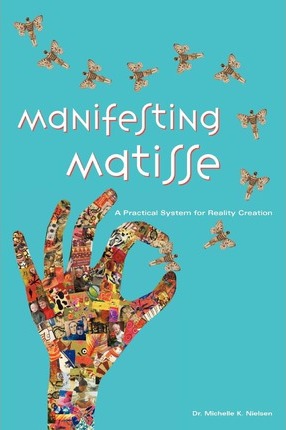 Another recent read was Manifesting Matisse, by Dr Michelle K. Nielsen. This book is a thorough, well detailed, 10-step “practical system for reality creation”. Alongside the system, Nielsen has documented the story of how she manifested her son’s miraculous healing. Her son, Matisse, was born at 29 weeks, and by age 5 was experiencing severe developmental delay, neurological damage and attachment problems. Whilst his extraordinary healing is a fascinating read in and of itself, it provides a brilliant illustration of how powerful this technique is, that no matter how unrealistic a desire might seem, that miracles are possible.
 Manifesting Michelangelo by Joseph Pierce Farrell is another brilliant book that offers insight into the very real possibilities, or potential, available to us to manifest miracles. The book is divided into two parts – Farrell’s story, followed by his manifestation process steps. Whilst I didn’t personally gain enormous growth from his process (even though I found it completely valid) given my journey so far, I found Farrell’s story offered a marvellous demonstration of the reality of miracles, because it seems so completely impossible. As the book describes, Farrell discovered that he has the ability to transform human tissue using the power of consciousness. Specifically, Farrell has eyewitness medical testimony, scientific evidence and photos to demonstrate that he can heal broken bones, restore facial deformities, heal chronically injured joints, dissolve inoperable tumours, and more. He has even used his abilities to provide cosmetic “surgery”. This is an absolutely fascinating story, and Farrell has dedicated his life to “exploring human consciousness and its relationship to health and healing in order to bridge the divide between science and spirituality”.

 If you’re not keen to get reading, you might instead like to check out the film, What the Bleep Do We Know (which has actually been adapted into a book as well, so you could read it too!). This film combines documentary with a narrative plot, and offers a view of the universe and human life, linking neuroscience and quantum physics, to illustrate how and why we do indeed have the ability to manifest the life we desire.
 Whilst I haven’t yet read any of their books but have watched a number of their videos, Esther & Jerry Hicks have provided the world with a wealth of information on the law of attraction that is, at it’s core, all about manifestation. The source of their information comes from “a group consciousness from the non-physical dimension” (
 Lastly, this book may seem a little off-topic, but I feel compelled to include it as it gives more food for though regarding our manifesting powers: The Hidden Messages in Water, by Dr Masaru Emoto. Emoto presents a theory of how water is connected to human consciousness. In a series of experiments, Emoto exposed water in glasses to different words, images, or music, and then froze the water and examined the resulting ice crystals with microscopic photography. He found that water exposed to “positive” variables produced beautiful, brilliant, complex and colourful crystals, whereas water exposed to “negative” variables produced disfigured, incomplete, asymmetrical, dull-coloured crystals. Whilst there is much criticism of Emotos work and theories from a scientific standpoint, it nonetheless offers a provocative concept – “since people are 70 percent water, and the Earth is 70 percent water, we can heal our planet and ourselves by consciously expressing love and goodwill”. If you’ve read E-Squared, you might recognise the similarity between Emoto’s work and the experiment with growing seedlings – directing loving energy towards one set of seedlings, and negative energy towards the other set.