
I’ve been so challenged recently with keeping grounded, maintaining my self-care practices, and maintaining calm and order amongst so much “busy-ness”. As Christmas draws nearer, there are moments when anxiety and fear of not being able to “get it all done” sets in. In truth, there are times when it’s tempting to admit defeat and resign myself to a sea of overwhelm. Sometimes it feels like it would be so much easier to throw my hands in the air, give up and wallow in self-pity and victimhood.
But I’ve come far enough on my path to know that what seems the easier option in these moments, actually ends up feeling so much worse.
I’m keeping my head above water, and I know what to do to help myself to rise above these challenges. I come back to my spiritual practices.
Meditation is the basis of my spiritual practice that keeps me sane during good times and bad. As I shared recently on my Facebook page, it’s often during the more challenging times that we find it increasingly difficult to commit to or keep up with a meditation practice, when in truth, these are the times when we need them the most. It’s so easy to believe the excuse of “I don’t have time”, especially during the festive season, and yet prioritising the time to commit to this action actually has this seemingly magical effect of opening up more time – it never ceases to truly amaze me. Then on the other hand, when things are going smoothly, it can be easy to fall into the trap of letting our practice slide here and there because we’re feeling good, and it doesn’t seem to urgent or necessary. However, it’s important to maintain our practice so that when challenging times do arrive (as they inevitably do if you’re human!), then you have the resilience to face whatever comes your way with more ease and grace.
I don’t pretend to have all the answers. I don’t pretend to be the perfect example. And I most certainly do not wish to make you feel that you’re inadequate or a failure if you don’t add my suggestions to your list of “Things That I Really Should Be Doing”. Been there, done that. And I’m pretty sure that your To Do list is more than long enough as it is. I share based on my experience, with the intention of inspiring you, because I want you to feel better. I invite you to take some serious consideration of the possibility that prioritising meditation can literally turn your life around and create the space and calm you crave.
So today I’m sharing some resources that can help make meditation a regular part of your life.
Chakra Cleanse Meditation

If you’ve been reading my words for a while, you’ll know that I love and recommend Belinda Davidson’s Chakra Cleanse Meditation, which is my daily practice. It is incredible, and it has changed my life. Having a guided meditation recording makes things so much easier in my opinion. I personally have found it easier to focus when concentrating on the guidance of Belinda’s words and instructions than simply focusing on my breath, which finds my mind wandering almost instantly. And, of course, this particular meditation is specific to cleansing and strengthening your chakras, so whilst you’re getting all the regular benefits of meditation, you’re also intentionally creating a strengthened energetic/vibrational state from a chakric perspective. This version is 35 minutes. Read more about chakras and Belinda’s work here, and about my experience with Belinda’s School of the Modern Mystic and my chakric journey here, here and here.
Meditones

If, the concept of meditation is new to you, or you’ve tried it and it all seems too hard, then another incredible tool that I love and recommend is the amazing work of Tahlee Rouillon of Sonesence. Tahlee incorporates binaural beats into her divine meditation tracks that she’s dubbed “Meditones”, which in layman’s terms basically means this: listen to her Meditones tracks through headphones, and you effortlessly get many of the benefits of meditation. Tahlee’s music is truly heavenly, and I adore listening to it in the evening before bed as a beautiful way to wind down. If you’ve attended any of my essential oils classes, it’s Tahlee’s music that I play on loop as gorgeous background tunes to help set a high-vibe tone. I love recommending Tahlee’s work, because it essentially means that there is NO EXCUSE! Anyone can sit back, relax, and listen to music through headphones. You can find out more about Sonesence meditones here and visit Tahlee’s online shop here.
Mindfulness
Mindfulness is another pillar of my spiritual practice, which for me is more about the way in which I go about my day, rather than a specific period of time when I sit down with my eyes closed. Mindfulness is actually quite a broad topic, but to begin with, it can be described as being aware of the thoughts that you are thinking. People often get caught up in thinking that they’re no good at meditating because they can’t focus, they drift off, and spend their time in meditation thinking about what to cook for dinner or the million things on their To Do list. The truth is, meditation is not about emptying your mind of these thoughts, but rather being aware that you’re having them, and then re-focusing your attention onto the object of your meditation, whether that be your breath, a mantra, one of your chakras, or something else. Simply becoming aware that you’re having these thoughts is progress in mindfulness! So please, don’t give up.
My mindfulness practice sees me aiming to be aware, as often as I can throughout the day, of the thoughts that I’m having. I found this very challenging initially, and it’s taken a lot of practice. When I’m doing something as common as washing the dishes or having a shower, I notice with more regularity what I’m thinking about. When I notice this, I automatically disconnect from the thought, and then I do my best to focus instead on the experience I’m having: the feel of my hands in the gloves, the scent of the shampoo. The effect of this practice, over time, has been phenomenal in keeping me calmer, and dealing with my children with less reactivity.
A great book to start with as you embark on your mindfulness journey is The Happiness Trap by Russ Harris. It’s a simple, easy read and very practical. The Power of Now by Eckhart Tolle is an incredible and much loved “bible” of many a spiritual seeker, but it is definitely a more challenging read, and perhaps not ideal if you’re in a state of overwhelm or new to the spiritual path. Please don’t dismiss it, but perhaps keep it on the shelf and know that the time will come when you’re ready for Tolle’s enlightened wisdom.
Essential Oils
How can I not mention the new loves of my life as such a beautiful way to support you with a meditation practice?! I love diffusing my dōTERRA essential oils every time I meditate to help me focus, to help me feel grounded, and to connect more easily to the spiritual realms. In addition to the physical therapeutic properties of essential oils, there are also the more subtle emotional effects that their chemical composition has on our brain. When you inhale the aroma of an essential oil, the scent is processed in the olfactory system of the brain, which connects to the limbic system where emotions and memories live. As you breathe in the scent of the essential oil, the limbic system creates a response in your brain based on memories associated with that particular aroma. Many times, the responses triggered by the limbic system can be emotional responses that are calming or uplifting, depending on the unique chemical structure of the oil as well as the your unique memories associated with the aroma, so each person can have a slightly different response to a particular oil. However, essential oils have specific chemical elements that can create a desired benefit. The following images from dōTERRA illustrates the properties elicited by an essential oil based on its chemical constituents.


I particularly like to use my oil blends with grounding and soothing properties during meditation, such as InTune or Balance, but it also varies depending on my emotional state and what I’m wanting to achieve. Frankincense is a favourite, but if I’m tired I’ll add an energising oil such as Peppermint. I’m also finding that aromatic use of essential oils are contributing to my mindfulness and presence practice, as they help me to be less in my head and more in my body – they give me something experiential to focus on. I become aware of the aroma of the oils in the diffuser, or the scent of the oils I’m wearing topically. In addition to these beneficial effects, they’re just such a yummy addition to my day and give me a little boost of motivation to sit in meditation and enjoy them.
Find out how to purchase dōTERRA essential oils here.
Delete or Delegate
So my last suggestion is not so much a resource, but a tip for you. If life is so full and so busy and so overwhelming that not one of the suggestions and resources above seems possible for you to incorporate into your life, please don’t feel bad. Try this: commit to removing at least 1 item from your To Do list. In our overstimulated and overworked society, we have the habit of over committing and often overcomplicating things. It doesn’t need to be this way. Take a look at your list, and find something – anything – and delete it. There is something that you can say no to. There is something that you can delegate to someone else. You don’t need to do it all. Just lightening your load that little bit can make a difference to how you feel. And if you make it a practice to delete 1 item from your list monthly, weekly, or even daily, it will soon add up and free up some space for you. This practice will help you to consider what you put on your list in the first place more thoughtfully. It’s about prioritising, about asking for or accepting help, and about knowing and believing that your worth is not determined by what you accomplish. You are enough, you are worthy, just because you exist.
Disclosure: This blog contains affiliate links. If you make a purchase through these links, I may receive an affiliate commission.
Main image credit: Road meditation by Nickolai Kashirin via Flikr. Used under license.



 Wishes Fulfilled is a wonderful read by the delightful Dr Wayne Dyer. Dyer has essentially condensed and translated the vast array of spiritual teachings that he has studied on the subject, mainly (in this book), the works of Neville and Ascended Master Saint Germain. I’m up to the final chapter, but so far, this book has been brilliant at offering me the ability to understand concepts that before I had zero understanding of, and that I didn’t have clarity around how they related to manifesting. Dyer focuses on how and why we are of God, we have God within us, and that we essentially are God. This informs the tools he provides for practically applying the manifesting process, and offers a bridge to the belief that we are the creators of our reality.
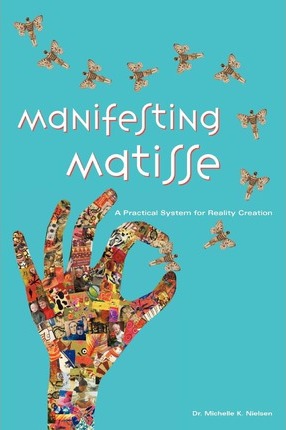 Another recent read was Manifesting Matisse, by Dr Michelle K. Nielsen. This book is a thorough, well detailed, 10-step “practical system for reality creation”. Alongside the system, Nielsen has documented the story of how she manifested her son’s miraculous healing. Her son, Matisse, was born at 29 weeks, and by age 5 was experiencing severe developmental delay, neurological damage and attachment problems. Whilst his extraordinary healing is a fascinating read in and of itself, it provides a brilliant illustration of how powerful this technique is, that no matter how unrealistic a desire might seem, that miracles are possible.
 Manifesting Michelangelo by Joseph Pierce Farrell is another brilliant book that offers insight into the very real possibilities, or potential, available to us to manifest miracles. The book is divided into two parts – Farrell’s story, followed by his manifestation process steps. Whilst I didn’t personally gain enormous growth from his process (even though I found it completely valid) given my journey so far, I found Farrell’s story offered a marvellous demonstration of the reality of miracles, because it seems so completely impossible. As the book describes, Farrell discovered that he has the ability to transform human tissue using the power of consciousness. Specifically, Farrell has eyewitness medical testimony, scientific evidence and photos to demonstrate that he can heal broken bones, restore facial deformities, heal chronically injured joints, dissolve inoperable tumours, and more. He has even used his abilities to provide cosmetic “surgery”. This is an absolutely fascinating story, and Farrell has dedicated his life to “exploring human consciousness and its relationship to health and healing in order to bridge the divide between science and spirituality”.

 If you’re not keen to get reading, you might instead like to check out the film, What the Bleep Do We Know (which has actually been adapted into a book as well, so you could read it too!). This film combines documentary with a narrative plot, and offers a view of the universe and human life, linking neuroscience and quantum physics, to illustrate how and why we do indeed have the ability to manifest the life we desire.
 Whilst I haven’t yet read any of their books but have watched a number of their videos, Esther & Jerry Hicks have provided the world with a wealth of information on the law of attraction that is, at it’s core, all about manifestation. The source of their information comes from “a group consciousness from the non-physical dimension” (
 Lastly, this book may seem a little off-topic, but I feel compelled to include it as it gives more food for though regarding our manifesting powers: The Hidden Messages in Water, by Dr Masaru Emoto. Emoto presents a theory of how water is connected to human consciousness. In a series of experiments, Emoto exposed water in glasses to different words, images, or music, and then froze the water and examined the resulting ice crystals with microscopic photography. He found that water exposed to “positive” variables produced beautiful, brilliant, complex and colourful crystals, whereas water exposed to “negative” variables produced disfigured, incomplete, asymmetrical, dull-coloured crystals. Whilst there is much criticism of Emotos work and theories from a scientific standpoint, it nonetheless offers a provocative concept – “since people are 70 percent water, and the Earth is 70 percent water, we can heal our planet and ourselves by consciously expressing love and goodwill”. If you’ve read E-Squared, you might recognise the similarity between Emoto’s work and the experiment with growing seedlings – directing loving energy towards one set of seedlings, and negative energy towards the other set.